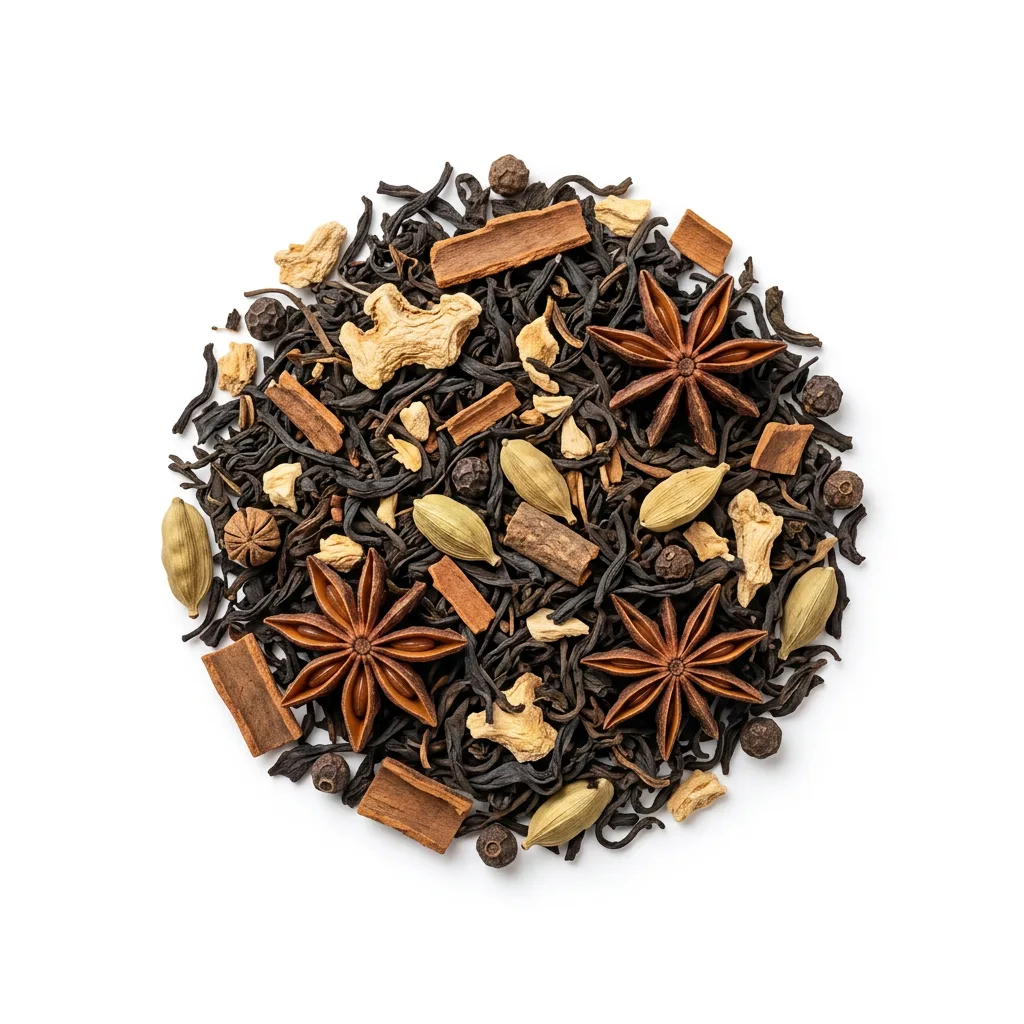
Chai Tea
Histamino Insights
Rate your personal Histamine experience for this food
to save these learnings for later
- 1200+ Low-Histamine Recipes
- Free Food-Checker (2000+ Foods)
- Free Food-Journal with AI Voice Agent
Now free: Download our App
Food research, daily tracking and expert training — in one private iPhone app.


Community Discussion
0 comments
Join the conversation
No comments yet. Be the first to share your experience!
About Chai Tea
Chai tea, a traditional Indian drink, is composed of several ingredients, including black tea, ginger, cardamom, cinnamon, fennel, clove, and black pepper. Each of these components may interact with histamine levels in different ways. Starting with black tea, it is mentioned in your list as a food substance that can delay the breakdown of histamine. Subsequently, the presence of black tea in chai could potentially lead to increased histamine levels in the body over time. However, further research is needed in this area to confirm these effects (1). Speaking of spice components in Chai tea, ginger and cinnamon have been suggested by some studies to exhibit anti-inflammatory and antihistaminic effects. Ginger, due to its gingerols, could potentially inhibit the production of nitric oxide, a compound that can trigger the release of histamine. Meanwhile, cinnamon has cinnamaldehyde which could potentially inhibit the activity of histidine decarboxylase, an enzyme that converts histidine into histamine, thereby reducing histamine levels if consumed in moderation (2,3). However, the effect of chai tea on histamine levels will likely depend on the individual ingredients and their concentrations in the tea, as well as individual factors such as tolerance and overall dietary intake. It's important to note that while some of the spices in chai tea may have beneficial effects, they could also be problematic for people who are sensitive to histamine or histamine-rich foods. In such cases, the amount of chai tea consumed, as well as the balance of other foods in the diet, will be crucial factors influencing histamine levels. Referring to current research literature, no direct and concrete information could be identified about chai tea's individual and combined effects on histamine levels. Thus, "This product has not been researched well enough to publish any information. Our team is working hard on this. Data will be available soon." References: 1. Maintz L, Novak N. Histamine and histamine intolerance. The American journal of clinical nutrition. 2007 May 1;85(5):1185-96. 2. Al-Amin ZM, Thomson M, Al-Qattan KK, Peltonen-Shalaby R, Ali M. Anti-diabetic and hypolipidaemic properties of ginger (Zingiber officinale) in streptozotocin-induced diabetic rats. British Journal of Nutrition. 2006 Oct;96(4):660-6. 3. Kaur G, Invally M, Khan M. Evaluation of the anti-asthmatic and antitussive potential of Cinnamomum zeylanicum in guinea pigs. International Journal of PharmTech Research. 2010;2(3):1682-6.
Histamino Insights
Rate your personal Histamine experience for this food
to save these learnings for later